Designing and Validating Remote Auscultation for At-Home Use
Aevice Health · Human Factor Study · 2023
Role
Product Designer (Sole Designer) & Human Factors Researcher · End-to-end design, study protocol, moderation, and synthesis.
Team
1 Regulatory Specialist, 1 Engineer
Timeline
2023 - 2024
Overview
A medical device is only effective if people can use it safely. Even a parent caring for a child at home
At Aevice Health, I designed and validated AeviceMD’s remote auscultation workflow, testing whether adults, caregivers and clinicians could safely set up the device, record lung sounds and share them with a care team. The 49-session summative study recorded no hazardous or critical use errors and contributed human-factors (HF) evidence to the FDA 510(k) submission.
64
95%+
zero
510(k)

Context
The user is a parent in a living room, not a clinician in a clinic
Remote auscultation removes the clinic visit. It also removes the trained person who normally holds the stethoscope.
The system now depends on a lay-user completing a sequence of physical and digital tasks: pair the device, apply the sensor, position it across five chest locations, record, share with the care team. Intended users span every level of technical fluency and education.
Every interaction had to answer:
1
Can users complete the task?
2
Can they complete it safely without introducing use-related risk?
Risk Analysis
Understanding the use-related risks
I started by understanding how users might fail in a virtual care workflow. With the regulatory team, I mapped likely use errors across the device, app, packaging and instructions, implemented risk mitigations measures then prioritised the critical tasks to be tested.
Potential Use Error (Example)
User selects one chest site in the app, but places the Sensor on a different chest site.
Potential Harm
Recording labelled with the wrong chest site, leading to inaccurate analysis by the clinician.
Risk mitigation
The app labels each position, with ‘Right’ and ‘Left’ labeled in the graphics and the recording filename carries the chest location.
Critical task
Severity · Moderate
Study Design
Designing a study around real-world use
To test whether AeviceMD could be used reliably as a remote stethoscope, I translated those critical tasks into an end-to-end scenario reflecting how the product would be used at home.
Participants had to independently complete the remote auscultation process:
Onboard and set up the AeviceMD device
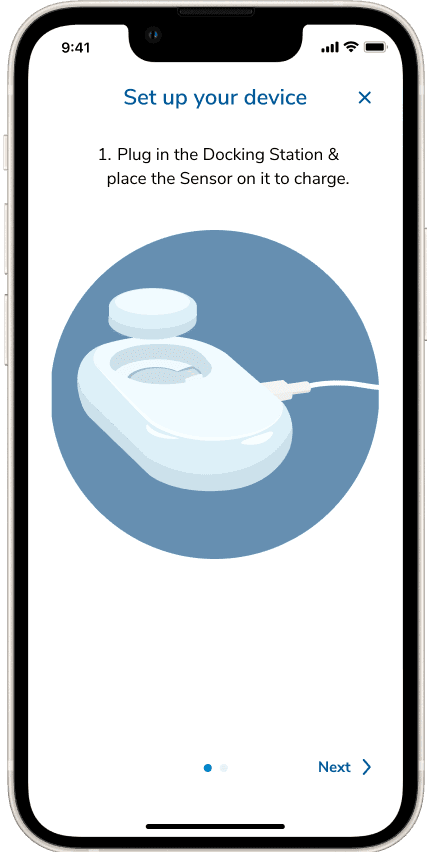
Task 2
Record lung sounds at five chest locations
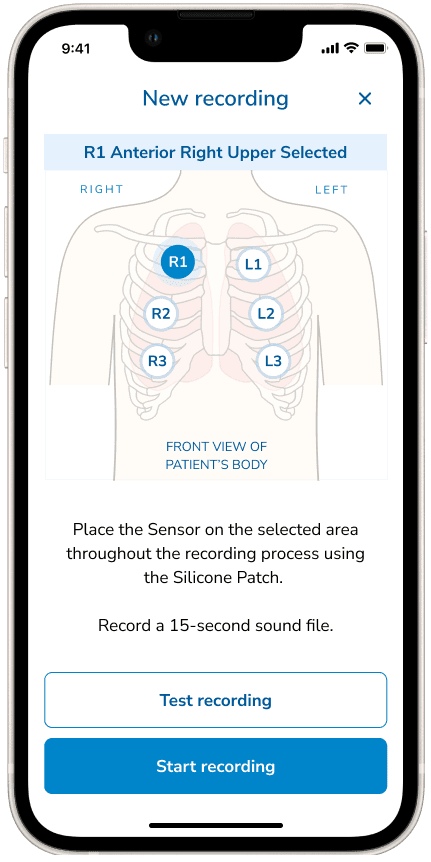
Share recording with the care team
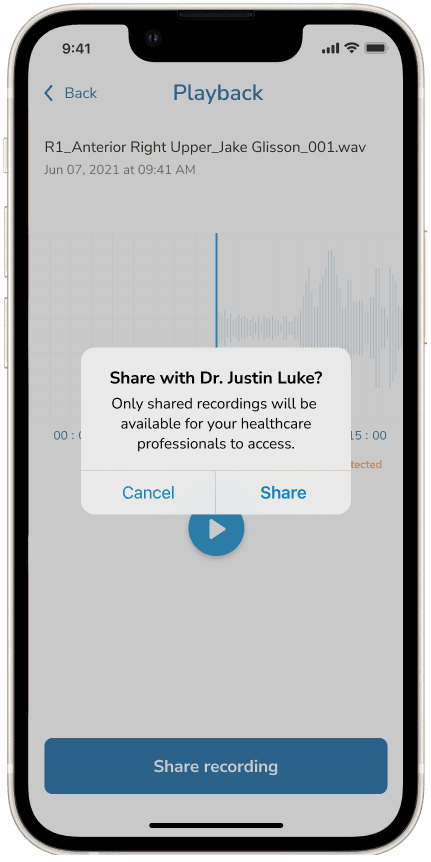
Throughout each moderated session, I observed…
How user completed tasks by themselves
Where they hesitated
How they recovered from errors
Moments where users paused or second-guessed themselves often revealed interaction problems that wouldn't appear in quantitative metrics. After each session, I consolidated recurring observations into usability themes.
Study Insights
Results synthesis across 49 sessions
15
caregiver-child pairs, ages 3 to 17
17
adult lay users, median age 37
17
Every participant completed the scenario-based remote auscultation workflow end to end, on their own.
Cleared
No hazardous or critical use errors were observed.
Participants who made early errors recovered without moderator intervention.
Redesign priority
Device setup was the clearest redesign priority.
8 participants failed to keep the Docking Station powered on during setup, adding confusion and setup time.
Device Wi-Fi setup error during onboarding left users stuck in a retry loop initially.
Reflection
What validating a medical device changed about how I design

Medical IoT requires system-level design thinking
IoT medical products combine physical and digital interactions. Designing safely meant evaluating how all touchpoints worked together, not optimising UI alone.
Real users rarely follow the ideal "happy path"
Edge cases reveal the real experience and a product’s strength shows in how well it supports a user through an error, not in its happy paths.
User testing is a continuous feedback loop
Findings from these sessions informed an improved setup flow, which I later evaluated in another study with 22 adults aged 42–82.